
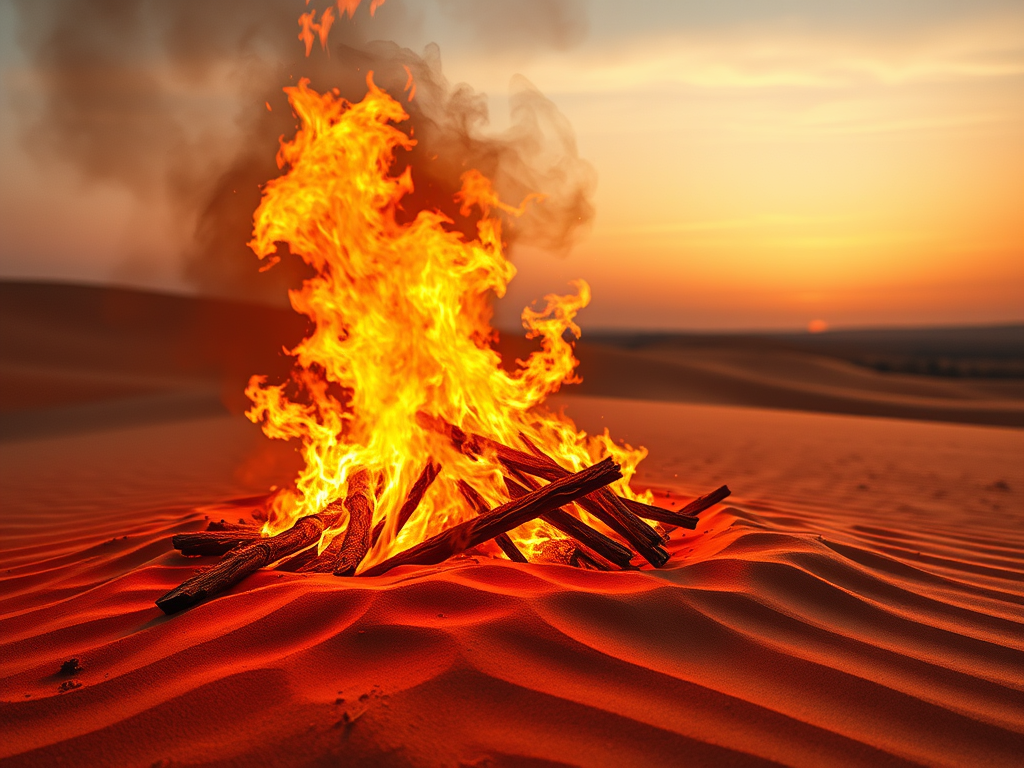
The Spark That Changed Everything: Why Fire Still Captivates Us
Imagine standing in a world untouched by light after sunset — the air thick with darkness, the night alive with unseen eyes. Then, in a flash of lightning, a tree bursts into flame. The crackle, the glow, the warmth — it’s terrifying and mesmerizing all at once. For the first human who dared to step closer, that moment changed everything.
That flicker of curiosity — the decision to approach instead of flee — marks one of the most profound turning points in human history. The discovery of fire was not merely a survival breakthrough; it was the birth of civilization itself. Fire gave early humans control over nature’s most powerful force, allowing them to cook food, forge tools, and gather safely through the night. It transformed our biology, our societies, and even our imagination.
But fire’s story doesn’t end in the Stone Age. Its legacy burns brightly in every corner of modern life — from the engines that power our cities to the digital networks that connect us. The same elemental force that once danced in prehistoric caves now fuels rockets, powers homes, and symbolizes creativity and passion in our culture.
In this exploration, we’ll trace the journey of fire — from its mysterious prehistoric origins to its enduring influence on science, technology, and the human spirit. Along the way, we’ll uncover how that ancient spark continues to shape the modern world and why, even in an age of artificial intelligence and renewable energy, fire still captures our collective imagination.
Before the Flame: Life Without Fire
Before humanity learned to command the flame, the world was a place of raw survival. Nights were ruled by darkness; the cold crept deep into bones; and every rustle in the shadows carried the threat of predators. Early humans lived much like other animals — bound by daylight, dependent on raw food, and vulnerable to the elements.
Without fire, there were no cooked meals to unlock extra calories, no warmth to expand into colder regions, and no light to extend the day. Anthropologists suggest that before the control of fire, human migration and development were severely limited — our ancestors were confined to temperate zones where survival didn’t demand warmth or cooked nutrition.
According to research published by the Proceedings of the National Academy of Sciences, evidence from sites such as Wonderwerk Cave in South Africa shows traces of controlled fire dating back nearly one million years, marking one of the earliest known moments when humans began to truly master it (source: PMC – The Discovery of Fire by Humans: A Long and Convoluted Process). Before that point, fire was purely a natural phenomenon — something to fear, not to wield.
The absence of fire shaped not only how early humans lived but also how they thought. Without warmth or light, social interaction was limited to daylight hours. Meals were simple and often risky, as raw meat and roots carried parasites and toxins. Life was a cycle of endurance — survival dictated by nature’s mercy.
Yet, in this darkness, curiosity smoldered. The first sparks of observation — watching lightning ignite a forest or lava burn through earth — planted the seed of wonder that would one day ignite civilization itself. Fire began as a mystery, but it would soon become humanity’s first great technology.
The First Encounter: Nature’s Fire and Human Curiosity
Long before humans learned to spark a flame, they watched fire from a distance — a wild, living force that both fascinated and terrified. Lightning strikes, volcanic eruptions, and spontaneous forest blazes offered the first glimpses of this untamed phenomenon. To early humans, fire must have seemed like a creature of its own — unpredictable, powerful, and divine.
Archaeological evidence suggests that our ancestors’ first interactions with fire were opportunistic rather than controlled. They may have approached the smoldering remains of wildfires to scavenge cooked animals or warm themselves briefly before the flames died out. These early encounters likely sparked a critical shift in human behavior — from passive observation to active experimentation.
According to research published in Current Anthropology, the relationship between humans and fire evolved gradually, as early hominins began to recognize its potential and learn how to preserve embers from natural sources (source: Toward a Long Prehistory of Fire – University of Chicago Press). This process wasn’t a single “Eureka!” moment — it was a long, adaptive journey spanning hundreds of thousands of years.
One of the most compelling pieces of evidence comes from Wonderwerk Cave in South Africa, where archaeologists discovered ash and charred bones dating back nearly one million years. These findings, detailed in The Discovery of Fire by Humans: A Long and Convoluted Process published by the Royal Society (source), suggest that early humans were not only using fire but also containing and maintaining it within living spaces — a major leap toward mastery.
Fire, at this stage, was still a borrowed gift from nature. Yet the ability to keep embers alive — to nurture flame through the night — marked a profound psychological and cultural transformation. It represented the dawn of intentional interaction with the environment: the first step toward technology, innovation, and control.
As humans learned to protect and prolong the flame, curiosity became courage. The line between fear and fascination blurred — and from that tension, the first sparks of progress were born.
From Fear to Mastery: The Domestication of Fire
At some point in prehistory, humanity crossed an invisible threshold — from watching fire to making it. What began as awe and fear evolved into understanding and control. This was not a single discovery, but a slow, deliberate mastery that unfolded over hundreds of generations. The moment early humans learned to create fire at will, they became true innovators — no longer at the mercy of nature, but shapers of it.
Archaeological and anthropological evidence suggests that this process, often referred to as the “domestication of fire,” was among the most transformative in human evolution. It marked the beginning of our capacity to manipulate energy — a skill that would eventually lead to metallurgy, agriculture, and modern industry.
According to The Archaeologist’s feature, The Domestication of Fire: A Turning Point in Human Evolution, early humans likely learned to produce fire through friction (rubbing wood together) and percussion (striking flint against pyrite to create sparks). These techniques allowed them to generate heat and light on demand, freeing them from reliance on natural wildfires. This mastery fundamentally altered human behavior, diet, and social structure.
Fire became the first controlled technology — a tool that could transform raw materials, cook food, and forge stronger tools. It also reshaped the human body: cooked food made nutrients more accessible, supporting brain growth and reducing the energy required for digestion. This evolutionary leap is supported by research published in PNAS, which links the habitual use of fire to improved dietary quality and expanded cognitive capacity (source: Onset of Extensive Human Fire Use 50,000 Years Ago – PNAS).
Beyond biology, the domestication of fire transformed human social life. Campfires became gathering places — early centers of storytelling, teaching, and cooperation. The flickering light extended the day, allowing for shared meals, planning, and cultural exchange. Around the fire, humanity found not only warmth but community.
By learning to kindle and sustain fire, humans took their first conscious step toward technological civilization. The flame that once symbolized danger became a source of security — a reflection of our growing intellect and courage. In mastering fire, we didn’t just change the world around us; we changed ourselves.
Fire and the Birth of Civilization
Once humanity learned to command fire, the world began to change in ways that would shape every civilization to come. Fire was no longer a borrowed force from nature — it became a partner in progress, transforming how humans ate, traveled, built, and even thought.
The mastery of fire unlocked the power of transformation — the ability to alter matter itself. With flame, raw meat became nourishment, clay became pottery, and metal became tools. These simple yet revolutionary shifts laid the foundation for agriculture, architecture, and industry — the cornerstones of civilization.
Cooking: The First Technological Revolution
Cooking with fire was humanity’s earliest and most profound innovation. By heating food, early humans made it safer, softer, and more digestible, unlocking calories that fueled brain growth and energy efficiency. This process, known as thermal processing, is widely credited with accelerating human evolution.
Research by biological anthropologist Richard Wrangham, author of Catching Fire: How Cooking Made Us Human, argues that cooking was “the spark that made us human” — a daily act that reshaped our anatomy, reduced chewing time, and freed energy for brain development.
Warmth, Safety, and Expansion
Fire provided more than food — it offered warmth and protection. With controlled flame, humans could venture into colder climates, expanding their range far beyond tropical zones. The light of campfires also deterred predators and allowed for nighttime activity, extending social and cognitive engagement after dark.
As noted in Smithsonian Magazine’s article on Fire’s Role in Human Evolution, this newfound control over the environment marked a turning point in human adaptability. Fire didn’t just help us survive; it allowed us to thrive anywhere on Earth.
Community and Culture Around the Flame
The campfire became humanity’s first social hub — a place for storytelling, teaching, and ritual. Around its glow, language and culture flourished. Anthropologists suggest that nighttime gatherings around fire fostered communication and cooperation, strengthening the social bonds that define our species.
In this way, fire wasn’t only a tool — it was a catalyst for community. It illuminated not just the night, but the human spirit.
The Foundation of Civilization
From the hearths of ancient villages to the forges of early cities, fire powered every leap forward. It was the unseen architect behind pottery, metallurgy, and agriculture — each a step toward organized society. The ability to manipulate fire meant the ability to shape the future.
In mastering fire, humanity didn’t just gain warmth and light — it gained identity. The flame became a symbol of knowledge, creativity, and control, illuminating the path from survival to civilization.
Fire as a Cultural and Spiritual Symbol
Long after humans learned to control fire, its meaning extended far beyond warmth and survival. Across every culture and era, fire became a symbol of transformation, purity, and divine power — a bridge between the physical and the spiritual. It was no longer just a tool; it was a metaphor for life itself.
The Sacred Flame in Ancient Civilizations
In ancient Greece, fire was considered a divine element — a gift stolen from the gods. The myth of Prometheus, who defied Zeus to bring fire to humanity, symbolized the dawn of knowledge and rebellion against ignorance. To the Greeks, fire represented both creation and consequence — a force that could enlighten or destroy.
In Zoroastrianism, one of the world’s oldest monotheistic religions, fire held an even more sacred role. Temples known as Atash Behrams housed eternal flames, representing truth and the divine light of Ahura Mazda, the supreme god. These fires were tended continuously, embodying purity and spiritual clarity (source: Encyclopaedia Iranica – Fire in Zoroastrianism).
Similarly, in Hinduism, fire (Agni) is both a god and a messenger between humans and the divine. Rituals like havan or yajna use fire to carry offerings to the heavens — a practice that endures even today. The Sanskrit word Agni literally means “ignite,” underscoring fire’s role as a conduit of transformation and communication with the cosmos (source: Britannica – Agni).
Fire as Purity and Renewal
Beyond religion, fire has long symbolized cleansing and rebirth. Ancient cultures used fire in purification rituals — burning incense, herbs, or effigies to drive away evil and renew spiritual energy. The symbolism endures in modern traditions, from candles lit in remembrance to fireworks celebrating new beginnings.
Even today, we speak of “lighting a fire within” — a metaphor for passion, drive, and inspiration. The flame still represents the inner spark of creativity and purpose, linking our emotional world to the same elemental force that once lit prehistoric caves.
The Duality of Fire
Yet, fire’s symbolism has always been dual. It is both sacred and dangerous — a reminder that progress and destruction often share the same spark. This duality appears in myths worldwide: the Phoenix rising from ashes, the burning bush of Moses, or the eternal Olympic flame that unites nations in peaceful competition.
As historian Stephen Pyne notes in his book Fire: A Brief History, “Fire is the great shape-shifter of the natural world — it consumes and it creates, it destroys and it renews.” Humanity’s reverence for fire is, in essence, reverence for transformation itself.
The Science of Fire: Understanding the Element
For all its mystery and symbolism, fire is not magic — it’s chemistry in motion. Yet even knowing that doesn’t make it any less fascinating. The same process that once awed our ancestors continues to power everything from candles to rocket engines. To truly appreciate fire’s impact on civilization, we first have to understand what it really is.
What Is Fire, Really?
Fire isn’t a solid, liquid, or gas — it’s a plasma, a visible manifestation of energy released during a chemical reaction known as combustion. When a material (the fuel) reacts with oxygen in the air, it releases heat, light, and new chemical compounds such as carbon dioxide and water vapor.
This process follows what scientists call the fire triangle — three essential elements that must coexist for fire to ignite:
- Fuel – something to burn (wood, gas, oil, etc.)
- Oxygen – the oxidizer that supports combustion
- Heat – the energy needed to start and sustain the reaction
Remove any one of these, and the flame dies. This principle underlies everything from firefighting techniques to rocket propulsion design (source: U.S. National Park Service – The Fire Triangle).
The Colors of Combustion
The mesmerizing colors of fire tell a story of temperature and chemistry. A blue flame, for instance, indicates complete combustion — hotter and cleaner, as seen in gas stoves or jet engines. Yellow or orange flames, common in wood fires, come from glowing soot particles that radiate light as they burn.
Each hue is a window into the physics of energy release. Scientists study these colors to analyze combustion efficiency, pollution, and even the composition of distant stars — because the same principles of fire apply across the universe (source: NASA – What Is Fire?).
Controlled Chaos: The Physics of Flame
Fire is a delicate balance between order and chaos. It spreads through convection — hot air rising, drawing in cooler air and fresh oxygen — creating the familiar flicker we see. That flicker is not random; it’s a rhythmic dance of heat and airflow, a miniature weather system sustained by energy exchange.
Modern combustion science builds on this ancient phenomenon. Engineers use fire’s physics to design cleaner engines, efficient furnaces, and even plasma-based propulsion systems for spacecraft. What began as a campfire has become the foundation of thermodynamics, energy engineering, and materials science.
Fire, the First Energy Technology
In essence, fire was humanity’s first lesson in energy conversion — turning chemical potential into usable heat and light. Every modern energy system, from fossil fuels to nuclear fusion, traces its conceptual roots back to that primal discovery.
As the American Chemical Society notes in its overview of combustion chemistry, “Fire was the first energy technology — and remains the blueprint for how humans understand and harness energy” (source: ACS – The Chemistry of Combustion).
Fire and the Rise of Technology
Once humans learned to harness fire, they didn’t just gain warmth — they gained power. Fire became the original engine of innovation, fueling every major technological leap from the Bronze Age to the Space Age. It was the first tool that allowed us to transform nature itself, turning earth into metal, sand into glass, and imagination into invention.
Metallurgy: Forging the Future
The discovery that fire could melt and shape metal marked one of humanity’s most revolutionary turning points. Around 6,000 BCE, early civilizations in Mesopotamia and Anatolia began smelting copper ores using charcoal-fueled furnaces. This mastery of heat birthed the Bronze Age, when humans combined copper and tin to create stronger, more durable tools and weapons.
According to the Science History Institute, this innovation was more than technological — it was social. Metalworking required specialized skills and organized labor, laying the groundwork for trade, craftsmanship, and urban development. Fire didn’t just forge metal; it forged civilization itself.
Glass, Pottery, and the Art of Transformation
Fire also unlocked the secrets of materials. Ancient Egyptians used high-temperature kilns to produce glass as early as 3,000 BCE, turning sand and ash into shimmering ornaments and vessels. Meanwhile, potters across Asia and the Near East discovered that clay hardened into durable ceramics when exposed to intense heat — a breakthrough that revolutionized storage, cooking, and art.
These fiery arts represented the first experiments in materials science, where humans learned to manipulate molecular structures long before understanding the chemistry behind them (source: Corning Museum of Glass – History of Glassmaking).
The Industrial Revolution: Fire Reimagined
Fast forward to the 18th century, and fire’s role evolved once again — from open flame to mechanical power. The invention of the steam engine, pioneered by engineers like James Watt, transformed fire’s heat into motion. By converting thermal energy into mechanical energy, fire became the driving force behind factories, locomotives, and ships — the engines of progress.
As historian Vaclav Smil notes in Energy and Civilization: A History, “The Industrial Revolution was, at its core, a revolution in fire.” The controlled combustion of coal and later oil powered the machines that built modern society — from textile mills to skyscrapers.
From Combustion to Innovation
Even today, the legacy of fire burns in every technological system we use. Internal combustion engines, jet turbines, and rocket boosters all rely on the same principle that once lit campfires: controlled release of energy through oxidation. Fire’s chemistry remains the foundation of modern energy — whether in a car engine or a spacecraft’s thrusters.
NASA’s rocket propulsion systems, for instance, are essentially fire under extreme precision, using liquid oxygen and fuel to generate explosive thrust (source: NASA – How Rockets Work). The same elemental reaction that once cooked mammoth meat now carries satellites — and humans — into orbit.
Fire in the Modern World: Innovation and Responsibility
In the modern age, humanity’s relationship with fire has evolved once again. We no longer gather around open flames for warmth or cooking — yet fire still powers nearly every aspect of our lives. From the electricity that lights our cities to the engines that move our world, fire remains the invisible heartbeat of civilization.
But with great power comes great responsibility. The same force that built our world now threatens it — through pollution, climate change, and energy overconsumption. The story of fire, once a tale of triumph, has become a test of restraint and wisdom.
The Hidden Fire of Industry and Energy
Modern fire no longer burns in hearths or torches; it burns inside machines. Every car engine, power plant, and jet turbine is essentially a controlled flame — a continuation of the same combustion process discovered hundreds of thousands of years ago.
According to the U.S. Energy Information Administration (EIA), more than 80% of the world’s energy still comes from burning fossil fuels — coal, oil, and natural gas — all descendants of ancient organic matter ignited by modern fire. This reliance has powered unprecedented growth, but it has also filled the atmosphere with carbon dioxide, reshaping the planet’s climate.
Fire and the Climate Paradox
The irony is striking: the very element that once gave humanity control over nature now threatens to destabilize it. Wildfires — intensified by global warming — consume millions of acres each year, releasing even more carbon into the air. In 2024 alone, global wildfire emissions reached record highs, contributing significantly to atmospheric CO₂ levels (source: Copernicus Atmosphere Monitoring Service (CAMS)).
This paradox underscores humanity’s next great challenge: learning not just to create fire, but to contain its consequences.
Reinventing the Flame: Clean Energy and Innovation
In response, scientists and engineers are reimagining fire’s future. Renewable energy sources — solar, wind, geothermal, and hydrogen — represent a new kind of flame: one that burns without destruction.
Hydrogen, in particular, is often called the “fire of the future.” When burned, it produces only water vapor, offering a clean alternative to fossil fuels. Research from the International Energy Agency (IEA) highlights hydrogen’s potential to decarbonize industries and transportation — a modern echo of humanity’s first great energy revolution.
Meanwhile, advances in plasma physics and fusion energy aim to replicate the fire of the stars themselves. Projects like ITER, the world’s largest fusion experiment, seek to harness the same nuclear reactions that power the Sun — the ultimate expression of fire’s cosmic legacy (source: ITER Organization – About Fusion).
The Ethics of Fire
As we stand on the edge of a new energy era, fire’s symbolism feels more relevant than ever. It reminds us that power and responsibility are inseparable. The flame that once gave us light now demands wisdom — a balance between innovation and preservation.
In the words of historian Stephen Pyne, “Fire made us human; now it will test our humanity.”
The Eternal Flame: Fire as Humanity’s Mirror
From the first spark struck in a dark cave to the roaring engines that carry us beyond Earth, fire has been our constant companion — a witness to every chapter of the human story. It is both the oldest technology and the most enduring metaphor, a mirror reflecting our dual nature: creators and destroyers, dreamers and doers.
A Flame That Defines Us
Fire is more than a tool; it is a reflection of human consciousness. To make fire is to imagine — to see potential in the unseen, to transform the ordinary into the extraordinary. Every civilization that has ever existed has carried this flame forward, not just as heat and light, but as knowledge and will.
When early humans gathered around a campfire, they didn’t just warm their bodies — they warmed their minds. The flickering glow became a stage for stories, a forge for ideas, and a symbol of continuity. In its light, we learned to cook, to craft, to think, and to dream.
As Science Magazine notes in its essay The History and Future of Fire, fire is not just a physical phenomenon but a defining force of the “Pyrocene” — an age in which human and fire histories are inseparable. We have shaped fire, and fire has shaped us.
The Paradox of the Flame
Yet, fire’s brilliance has always carried a shadow. It is the same power that warms homes and razes forests, that fuels progress and threatens the planet. Every time we ignite a match, a stove, or an engine, we participate in this ancient paradox — wielding creation’s most potent symbol, knowing it can just as easily consume what it builds.
This duality lies at the heart of the human condition. Fire teaches us that mastery is not domination, but balance — the ability to hold power without being devoured by it.
The Fire Within
Today, as we seek cleaner energy and sustainable futures, fire continues to burn — not just in furnaces and reactors, but in us. It lives in our curiosity, our courage, and our relentless drive to explore. The same spark that lit the first torch now fuels rockets, ideas, and revolutions.
Perhaps that is fire’s greatest legacy: it reminds us that to be human is to burn with purpose — to illuminate, to create, to endure.
The Eternal Flame
And so, the story of fire is not ending; it is evolving. Whether it flickers in a candle, glows in a reactor, or burns in the heart of a star, fire remains the thread that connects our past to our future.
It is the eternal flame of civilization — fragile yet fierce, destructive yet divine — a reminder that within every light we kindle lies the reflection of who we are, and who we aspire to become.