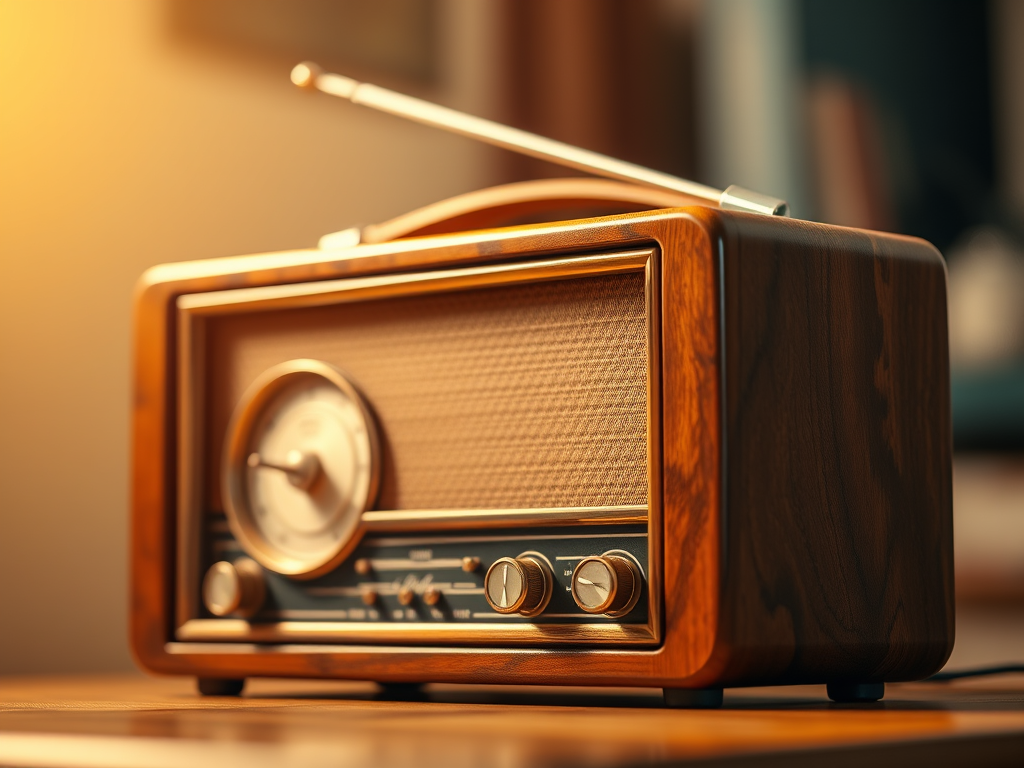
The invention of the radio changed the way we communicate, share news, and enjoy entertainment. It made information accessible to people in cities and remote areas alike. Radio built a new bridge between communities by delivering news, music, and stories directly into people’s homes, shaping society in profound ways.

We can trace the roots of radio back to important discoveries in electromagnetism and the work of inventors like Guglielmo Marconi. Their efforts helped turn a scientific idea into a practical tool for wireless communication that quickly grew into a mass medium. The radio’s impact stretches beyond technology; it influenced culture, politics, and daily life.
As we explore the history and effects of radio, we’ll see how this invention not only connected the world but also laid the foundations for modern communication systems. Understanding radio helps us appreciate the ways technology continues to shape our lives today. For more details on how radio changed society, see this in-depth history of radio invention and its impact.
Origins and Key Inventors of Radio

The story of radio starts with the discovery of invisible waves and moves through inventions that turned these waves into messages and broadcasts. Key inventors worked on sending signals without wires, leading to voice transmissions and the first radio stations that reached wide audiences.
Discovery of Radio Waves and Early Experiments
The foundation of radio was the discovery of radio waves, a type of electromagnetic wave. In the 1860s, James Clerk Maxwell predicted these waves with his equations, showing they could carry energy through space.
Later, Heinrich Hertz proved Maxwell’s theory in the late 1880s by generating and detecting radio waves in a lab. Hertz’s experiments confirmed that radio waves could travel through the air, which was essential for wireless communication.
These discoveries led scientists and inventors to explore using radio waves to send messages without wires. It laid the groundwork for the wireless telegraph and later, voice transmissions through radio technology.
Marconi and the Wireless Telegraph
Guglielmo Marconi is often called the father of practical radio because he turned theory into usable technology. In the 1890s, Marconi developed a wireless telegraph system that sent Morse code signals over miles.
In 1899, he successfully sent a wireless message across the English Channel, and in 1901 he achieved a major feat: transmitting a signal over 2,000 miles across the Atlantic Ocean. This proved long-distance wireless communication was possible.
Marconi’s work made wireless telegraphy valuable for ships at sea and earned him the Nobel Prize in Physics in 1909. His inventions formed the base for using radio waves to send messages without wires.
First Voice Transmissions
Sending Morse code was just the start. Inventors like Reginald Fessenden advanced radio by transmitting voice and music. In 1900, Fessenden sent the first wireless voice transmission using a continuous-wave transmitter.
On Christmas Eve, 1906, Fessenden broadcast his voice and a violin performance to ships at sea. This was the first known audio broadcast, moving radio beyond simple coded messages.
The ability to transmit voice and music opened new possibilities for radio as a mass communication tool. These developments laid the foundation for modern radio broadcasting.
Rise of the First Radio Stations
Radio moved from experiments to public broadcasts in the 1920s. The first commercial radio station, KDKA in Pittsburgh, started broadcasting in 1920, famously airing the U.S. presidential election results.
KDKA’s success showed how radio could reach large audiences with news and entertainment. This inspired many other stations and the growth of radio networks like NBC and CBS.
This era marked the start of radio as a part of daily life, transforming media and communication worldwide with radio technology becoming a key tool for news, music, and culture.
The Birth of Radio Broadcasting

Radio broadcasting began as a new way to send information and entertainment directly into people’s homes. It quickly grew from simple signals into full radio stations offering news, music, and shows. The technology and business of radio expanded, making it a key part of daily life for many.
AM Radio and the Expansion of Accessibility
AM radio was the first type of radio broadcasting to reach the public widely. It stands for Amplitude Modulation, which changes the strength of the radio signal to carry sound. This method was simpler and easier to receive on early radios.
In the 1920s, AM radio stations started popping up across the United States. One of the first was KDKA in Pittsburgh, which began in 1920 as the first station to broadcast regularly. This marked the start of radio reaching many homes.
Because AM radio signals could travel long distances, people in rural and urban areas could listen to the same broadcasts. This helped connect communities and spread information quickly.
Early Radio Shows and Programs
The earliest radio shows were simple but quickly grew more varied. They included music, news, and short talks. These programs gave people new ways to enjoy entertainment without leaving their homes.
Popular early radio programs included comedy and drama shows, which became very popular by the late 1920s. Shows like “The Goldbergs” offered family entertainment. Radio also carried live music performances and variety shows.
News broadcasts became important too. Radio brought events directly to listeners, giving quick updates during major moments. This created a trusted source of information alongside newspapers.
Development of Commercial Radio
Commercial radio started in the early 1920s as businesses saw its potential for reaching customers. Radio stations began selling advertising time, funding their operations through sponsors.
This change helped the radio industry grow fast. Businesses sponsored shows to promote products, which made radio sustainable as a business. This commercial model shaped the programming and the types of shows created.
Radio stations formed networks to share programs over larger areas. This system increased consistency in programming and helped advertisers reach larger audiences.
By the late 1920s, radio had cemented itself as a major entertainment and information source, supported by a growing commercial industry centered on stations like KDKA and others across the country.
For more on the growth and impact of radio broadcasting, see the history of radio broadcasting.
Radio as a Catalyst for Social and Cultural Change
Radio changed how we receive information, entertainment, and music. It connected us during moments of crisis and helped shape public views and culture. Its influence spread through news broadcasts, popular shows, and the promotion of new music styles.
Radio’s Role in News and Public Opinion
Radio became a main source for news, especially during critical times like World War II. We relied on broadcasts to stay informed about the war’s progress and government updates. President Franklin D. Roosevelt’s “Fireside Chats” showed how radio could build trust by speaking directly to the public.
Radio also shaped public opinion by providing a platform for political discussions and debates. Talk shows and news programs allowed us to hear different viewpoints, which influenced national conversations. The Fairness Doctrine helped ensure coverage was balanced, affecting how we understood political issues and social change.
Entertainment and the Golden Age of Radio
The Golden Age of radio, from the 1930s to the 1940s, was a time when radio was the top entertainment source for many families. We gathered around the radio to listen to dramas, comedies, and variety shows. Programs like “The Jack Benny Program” provided laughter and escape during hard times.
Radio kept us connected to live events and storytelling that no other medium could match then. The unique mix of sound effects, music, and voices created immersive experiences. This era laid the groundwork for how entertainment would evolve when television appeared.
Influence on Music Genres and Culture
Radio opened doors for many music genres that became part of our culture. Jazz, country, and early rock ‘n’ roll gained popularity through airplay, reaching audiences across the country. This exposure helped break down cultural barriers by sharing regional sounds widely.
In later years, radio continued promoting new genres like hip-hop, helping them enter mainstream culture. The platform allowed artists to reach listeners who might never have heard their music otherwise. Radio broadcasting remains crucial in shaping the musical tastes that define different generations.
For more details, see the article on The Rise of the Radio Industry and Its Cultural Impact.
Technological Advances and the Digital Transformation
Radio technology has grown significantly from its early days, improving how we receive and share audio content. The shift from analog to digital formats has changed the way radio operates and expanded its reach globally. These changes have impacted signal quality, access, and listener engagement.
From AM to FM and Beyond
We saw major improvements when radio moved from AM to FM. AM radio, with its simple amplitude modulation, was the first way to broadcast widely, but it often came with static and interference. FM radio introduced frequency modulation, which provided clearer sound, better quality music broadcasts, and less noise.
Technological advancements like stronger transmitters and better antenna designs also helped FM cover larger areas. Today, FM remains important, but we also use newer systems for clearer signals and wider coverage. These improvements made radio more reliable and enjoyable for everyday use.
Emergence of Digital Formats and Internet Radio
Digital formats transformed radio by allowing clearer sound and more efficient broadcasting. Unlike analog signals, digital radio can carry complex data and multiple channels at once. This shift led to services like DAB (Digital Audio Broadcasting), which offers listeners more stations and better audio quality.
Internet radio took this a step further by using the web to stream audio worldwide. Mobile apps and streaming platforms now let us listen anywhere, on demand. This means radio is no longer limited to local broadcasts. Digital and internet radio expanded how and when we access programs, adding convenience and variety.
The Evolution of Community Radio
Community radio has grown alongside these technologies. It focuses on local content, giving voices to smaller groups or underserved populations. As digital tools became cheaper and more available, many community radios upgraded their systems to reach wider audiences.
These stations use online streaming to connect with listeners beyond their immediate area. Digital technology also helps them share diverse content more easily, supporting local culture and news. This evolution shows how radio remains vital for community engagement and information in the digital era.
Learn more about the technological changes that shaped radio’s journey in this article about the remarkable journey and continued relevance of radio in the digital age.
Modern Audio Media: Podcasting, Streaming, and Future Directions
Audio media today is shaped by digital platforms that offer on-demand content, personalized listening, and smart technology integration. These changes affect how we consume and interact with audio, pushing traditional formats to evolve or compete.
Podcasting and New Content Platforms
Podcasting has changed audio content by offering a wide range of topics and formats beyond traditional radio. We can now access millions of podcasts covering niche interests like finance, true crime, or self-help. Platforms like Spotify and Apple Music have made finding and streaming podcasts easier and more interactive.
Podcasts allow creators to produce long-form, deep-dive content with minimal restrictions. This has led to more diverse voices and unique storytelling styles. Listener control is a major advantage—we decide when and what to listen to, rather than following preset schedules.
Radio’s Competition with Streaming Services
Streaming services have directly challenged traditional radio by offering on-demand music, podcasts, and personalized playlists. Unlike radio, streaming gives us the power to skip songs, avoid ads, and select content precisely suited to our tastes.
Spotify, Apple Music, and others have expanded their offerings to include podcasts, making them all-in-one audio platforms. Traditional radio’s reliance on fixed schedules and frequent advertising has caused some listeners to shift to streaming, which feels more convenient and less intrusive.
Integration with Smart Speakers and Modern Society
Smart speakers have become key devices for accessing audio media at home and on the go. Voice commands allow us to play music, podcasts, or radio without touching a device, making audio media more accessible and integrated into daily routines.
Our homes are adapting to this technology, with devices like Amazon Echo and Google Nest growing in popularity. They support multiple streaming services and radio apps, blending traditional and modern audio experiences. This connectivity is reshaping how we engage with audio in everyday life.
The Future of Radio Broadcasting
Radio is not disappearing but adapting. Many stations now offer live streams online and create podcast versions of their shows to reach digital audiences. Some also use on-demand playback features in their apps to compete with streaming.
The future of radio will likely involve hybrid models combining live broadcasts with digital content. As we see evolving listener habits, radio networks must innovate by merging traditional strengths with new technologies to stay relevant in a fast-changing media landscape.