
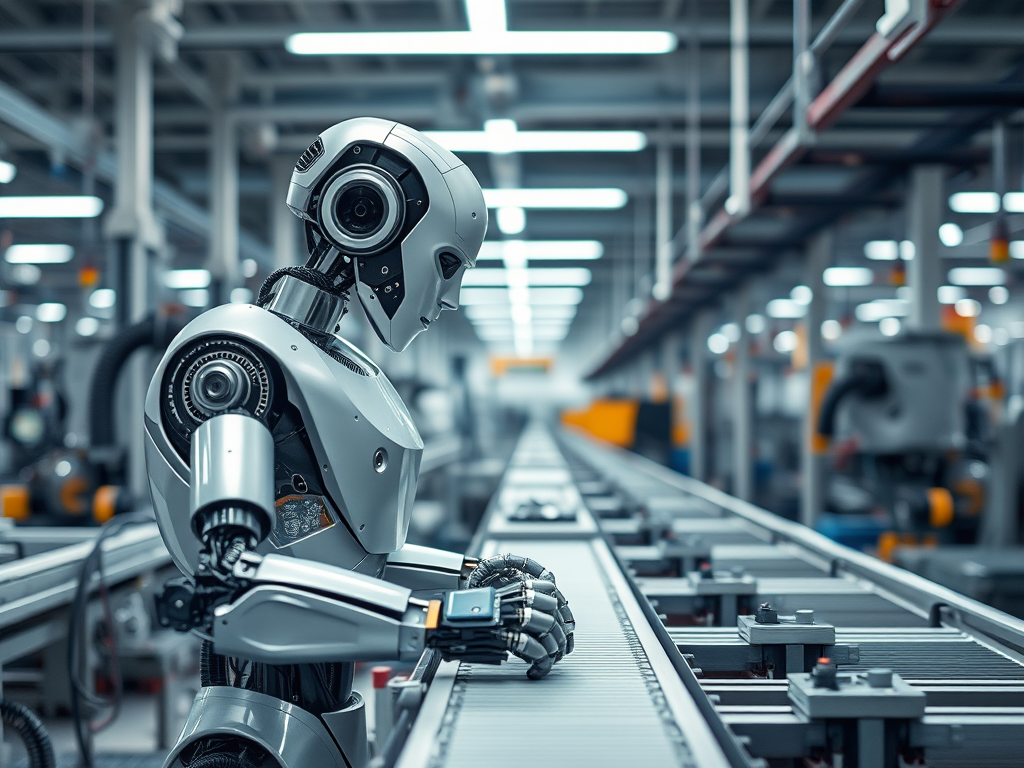
1- Introduction: The New Era of Human–AI Collaboration
Artificial Intelligence (AI) has evolved from a futuristic concept into an essential driver of modern productivity. Today, AI systems are embedded in nearly every aspect of our personal and professional lives — from personalized recommendations and voice assistants to advanced analytics and generative tools that support creative work. According to MIT Sloan Management Review, the most effective workplaces are those where humans and AI collaborate strategically, leveraging each other’s strengths rather than competing.
In the workplace, this transformation has redefined how organizations operate and how individuals approach their daily tasks. Businesses are increasingly using AI not just to automate repetitive processes, but to amplify human creativity and decision-making. As noted in a McKinsey Digital report (2025), companies that successfully integrate AI into their workflows see significant gains in innovation, efficiency, and employee engagement.
This shift has also sparked a broader conversation about what productivity truly means in the digital age. Traditional definitions—focused on output and efficiency—are giving way to a more nuanced understanding that values creativity, adaptability, and human insight. AI tools can process vast amounts of data in seconds, but it’s human intuition and contextual understanding that turn those insights into meaningful action.
As highlighted in research published in the National Library of Medicine (PMC), openness to AI collaboration significantly enhances human performance and job satisfaction. When humans and AI systems co-create, they achieve a synergy that neither could accomplish alone.
The real story, then, isn’t about AI replacing humans—it’s about AI reshaping how we achieve productivity across industries. From healthcare and education to marketing and manufacturing, we’re witnessing a new era where human intelligence and artificial intelligence coexist and complement one another.
In this article, we’ll explore how AI is transforming productivity at every level—individual, team, and organizational—while examining the ethical, psychological, and strategic dimensions of this powerful collaboration.
2- Understanding Productivity in the Age of AI
The concept of productivity has always been central to human progress. Traditionally, it was measured by how efficiently people could produce goods or complete tasks within a given time. However, in today’s digital and knowledge-driven economy, productivity is no longer just about output—it’s about impact, creativity, and intelligent use of technology.
Artificial Intelligence (AI) has fundamentally changed how we define and measure productivity. Instead of focusing solely on “doing more,” AI empowers individuals and organizations to work smarter—streamlining processes, enhancing decision-making, and enabling more meaningful, strategic contributions. According to Harvard Business Review, AI-driven tools are helping employees shift from routine execution to higher-value tasks that require judgment, empathy, and innovation.
2.1. From Efficiency to Effectiveness
In the industrial era, productivity gains came from automation and process optimization. Machines replaced manual labor, allowing humans to focus on oversight and coordination. In the AI era, the shift is more cognitive than physical. As Deloitte Insights notes, AI enhances not just efficiency but effectiveness—helping humans make better decisions, uncover new opportunities, and reduce cognitive load.
For example, AI-powered analytics platforms can analyze millions of data points to reveal trends and insights that would take humans weeks to uncover. This doesn’t just save time—it improves the quality of outcomes by enabling data-driven strategies and reducing human error.
2.2. The Human Element in AI-Driven Productivity
While AI excels at speed and scale, humans remain irreplaceable for creativity, empathy, and contextual understanding. Productivity in the AI age depends on the synergy between human judgment and machine intelligence. A World Economic Forum report emphasizes that the most productive teams of the future will be “hybrid” ones, where humans and AI systems collaborate seamlessly, each focusing on their comparative strengths.
For instance, in customer service, AI chatbots can handle basic queries instantly, while human agents focus on complex, emotionally nuanced interactions. In marketing, AI can generate data-backed insights, while human strategists craft compelling narratives that resonate with audiences.
2.3. Rethinking Metrics of Success
As AI becomes integral to workflows, traditional productivity metrics—like hours worked or tasks completed—are becoming obsolete. Instead, organizations are adopting new performance indicators that capture creativity, innovation, and strategic contribution. According to PwC’s AI Predictions Report, leading companies are shifting toward measuring “augmented productivity”—the combined output of human and AI systems working together.
This new paradigm emphasizes outcomes such as:
- Quality of insights rather than quantity of output.
- Speed of innovation rather than time spent.
- Collaborative efficiency across human-AI teams.
Ultimately, productivity in the age of AI is not about replacing human effort—it’s about amplifying human potential. The organizations that thrive will be those that view AI not as a tool of automation, but as a partner in innovation and growth.
3. The Evolution of AI and Its Entry into the Workforce
Artificial Intelligence (AI) has undergone a remarkable transformation—from a theoretical concept in computer science labs to a practical, indispensable force in the global economy. Understanding this evolution helps explain how AI has become a cornerstone of modern productivity and why its integration into the workforce represents one of the most significant technological shifts of the 21st century.
3.1. From Rule-Based Systems to Intelligent Learning Machines
The early stages of AI in the 1950s and 1960s were defined by rule-based systems, where computers followed explicit instructions to solve problems. These systems could perform structured tasks but lacked adaptability. The real breakthrough came with machine learning (ML) and deep learning, which allowed systems to learn from data and improve over time.
As Stanford University’s AI Index Report highlights, advancements in computational power, data availability, and algorithmic sophistication have fueled AI’s exponential growth. This shift from pre-programmed logic to self-improving intelligence paved the way for AI applications that can recognize patterns, predict outcomes, and even generate creative content.
3.2. The Rise of Applied AI in the Workplace
The 2010s marked the era of applied AI—where theoretical research transitioned into real-world business solutions. Companies began integrating AI into workflows to automate processes, analyze data, and enhance decision-making. According to McKinsey & Company, organizations that adopted AI early saw measurable gains in productivity, cost efficiency, and innovation speed.
Examples include:
- Finance: AI algorithms detecting fraud and optimizing investment portfolios.
- Healthcare: Machine learning models assisting in diagnostics and personalized medicine.
- Retail: Predictive analytics improving inventory management and customer personalization.
These applications demonstrate how AI moved from being a support tool to becoming a strategic partner in value creation.
3.3. The Democratization of AI Tools
One of the most significant developments in recent years has been the democratization of AI—making powerful AI tools accessible to non-technical users. Platforms like ChatGPT, Google Gemini, and Microsoft Copilot have enabled professionals in every field to harness AI for writing, analysis, coding, and creative work.
As MIT Technology Review notes, this accessibility has lowered barriers to entry, allowing small businesses, freelancers, and educators to compete on a level once reserved for large enterprises. The result is a more inclusive and dynamic digital economy.
3.4. The Shift from Automation to Collaboration
Initially, AI’s role in the workforce was viewed through the lens of automation—machines replacing human labor in repetitive or low-skill tasks. However, the narrative has evolved toward collaboration. Research published in ResearchGate’s “Collaboration in the Machine Age” emphasizes that the most productive outcomes arise when humans and AI work together, blending machine precision with human creativity and ethical reasoning.
This shift represents a new stage in AI’s evolution: from a tool that does work to a partner that enhances work. As organizations adopt this mindset, they’re discovering that AI doesn’t replace human talent—it augments it, enabling people to focus on innovation, strategy, and problem-solving.
4. How AI Enhances Individual Productivity
Artificial Intelligence is not just transforming organizations—it’s empowering individuals to work faster, think smarter, and create more effectively. Whether you’re a marketer, developer, educator, or entrepreneur, AI tools have become powerful allies in streamlining daily tasks, enhancing decision-making, and freeing up time for higher-value work.
According to Harvard Business Review, professionals who integrate AI into their workflows report productivity gains of up to 40%, particularly in areas like research, writing, project management, and data analysis. The key lies in understanding how to leverage AI not as a replacement for human effort, but as an extension of human capability.
4.1. Automating Repetitive Tasks
One of AI’s most immediate and visible impacts is its ability to automate time-consuming, repetitive tasks. From scheduling meetings to sorting emails and generating reports, AI systems handle routine work with precision and speed.
Tools like Grammarly, Notion AI, and Zapier AI are helping professionals reclaim hours each week by automating administrative tasks. According to Forbes, automation through AI can reduce manual workload by up to 60% in certain roles, allowing employees to focus on creative and strategic thinking.
This shift doesn’t just save time—it reduces cognitive fatigue, enabling people to dedicate mental energy to innovation, problem-solving, and relationship-building.
4.2. Decision Support and Data-Driven Insights
AI’s ability to process vast amounts of data in real time has made it a crucial decision-support partner. Instead of relying on intuition alone, professionals can now make informed choices backed by predictive analytics and pattern recognition.
For instance, sales teams use AI-powered CRM systems like Salesforce Einstein to forecast demand and personalize outreach. Financial analysts leverage machine learning models to detect anomalies and optimize investment strategies. A McKinsey report found that AI-assisted decision-making can boost individual output by up to 25%, especially when combined with human oversight.
AI doesn’t replace human judgment—it enhances it by surfacing insights that might otherwise remain hidden in complex datasets.
4.3. Personalization and Focus Enhancement
One of the most underrated ways AI boosts productivity is through personalization. Modern AI tools adapt to individual work styles, helping users stay focused and organized.
For example, Microsoft Copilot and Google Workspace AI dynamically summarize meetings, prioritize emails, and suggest next steps—all tailored to your workflow. Meanwhile, tools like Reclaim.ai and Motion use machine learning to optimize your calendar and protect deep work time.
According to the World Economic Forum, personalized AI assistants can increase focus and task completion rates by up to 30%, primarily by reducing context switching and digital overload.
By aligning technology with human rhythms, AI helps individuals achieve flow state productivity—a balance of efficiency, creativity, and satisfaction.
4.4. Creativity and Skill Amplification
Beyond automation and analytics, AI is also becoming a creative collaborator. Generative AI tools like ChatGPT, Midjourney, and Claude enable professionals to brainstorm, draft, and prototype ideas faster than ever before.
A study published in the National Bureau of Economic Research (NBER) found that workers using generative AI completed creative writing and marketing tasks 25% faster and produced higher-quality results compared to control groups. This suggests that AI doesn’t just make people more efficient—it makes them more capable.
By handling the heavy lifting of ideation and iteration, AI allows humans to focus on strategy, empathy, and originality—the uniquely human elements that drive meaningful innovation.
4.5. The Empowered Professional: Humans + AI
The most productive individuals of the future won’t be those who work the hardest—but those who collaborate most effectively with AI. As MIT Sloan Management Review notes, the highest-performing professionals are those who understand when to let AI take the lead and when to assert human intuition.
This synergy marks a new paradigm: human-AI augmentation. Instead of viewing AI as a threat, forward-thinking professionals see it as a co-pilot—one that enhances their performance, creativity, and confidence.
5. Team and Organizational Productivity Gains
While AI is revolutionizing individual work, its greatest potential emerges when applied at the team and organizational level. Across industries, AI is transforming how teams collaborate, make decisions, and deliver value—creating smarter, more agile, and data-driven workplaces.
According to Deloitte’s 2025 Global Human Capital Trends Report, organizations that strategically integrate AI into team workflows experience productivity increases of up to 40%, along with stronger innovation and employee satisfaction. The key lies in using AI not just to automate, but to amplify collective intelligence.
5.1. Streamlining Collaboration and Communication
AI-powered collaboration tools are eliminating inefficiencies that once slowed teams down. From real-time transcription and translation to automated meeting summaries, these technologies ensure that communication is clear, inclusive, and actionable.
Platforms like Microsoft Teams with Copilot, Zoom AI Companion, and Slack GPT are redefining how teams share knowledge and coordinate tasks. As MIT Sloan Management Review notes, AI-driven collaboration tools can reduce information silos and improve project turnaround times by 25–30%.
For global teams, AI’s ability to translate languages and summarize complex discussions ensures that all members—regardless of location or background—are aligned and informed. This democratization of information fosters a more connected and productive workplace.
5.2. Enhancing Project Management and Workflow Efficiency
AI has become a powerful ally in project management, helping teams stay organized, meet deadlines, and allocate resources effectively. Tools like Asana Intelligence, Monday.com AI, and ClickUp Brain use predictive analytics to identify bottlenecks, estimate workload capacity, and suggest optimal task sequencing.
A McKinsey study found that AI-enabled project management reduces time spent on administrative coordination by up to 35%, freeing leaders to focus on strategic decision-making.
Moreover, AI systems can proactively flag risks, forecast project outcomes, and recommend adjustments in real time—turning reactive management into proactive leadership.
5.3. Data-Driven Performance Optimization
At the organizational level, AI transforms how performance is measured and improved. Instead of relying on static metrics, companies are adopting AI-powered performance analytics that continuously assess productivity, engagement, and collaboration patterns.
According to the World Economic Forum, organizations using AI-driven analytics to monitor workflow efficiency see up to 20% higher output and improved employee well-being. These systems can identify overworked teams, detect skill gaps, and even recommend personalized training—creating a culture of continuous improvement.
For instance, IBM’s Watson Orchestrate uses AI to analyze workforce data and suggest ways to optimize team structures and workloads, ensuring that talent is deployed where it has the greatest impact.
5.4. Fostering Innovation and Knowledge Sharing
AI doesn’t just make teams faster—it makes them smarter. Knowledge management platforms like Notion AI, Guru, and Confluence Intelligence use natural language processing to capture, organize, and surface institutional knowledge. This ensures that insights from one project or department can easily inform another.
As Harvard Business Review emphasizes, AI fosters innovation by connecting ideas across silos and enabling real-time brainstorming through generative models. Teams that leverage AI for ideation and research report higher creativity scores and faster problem-solving cycles.
By turning data into insight and insight into action, AI helps organizations build a culture of continuous learning and innovation.
5.5. Building AI-Ready Teams and Cultures
The most successful organizations don’t just deploy AI tools—they cultivate AI-literate teams that understand how to use them effectively. According to PwC’s AI Business Survey 2025, companies that invest in AI training and change management see double the ROI from their AI initiatives compared to those that don’t.
Building an AI-ready culture means encouraging curiosity, transparency, and collaboration between humans and machines. When employees understand AI’s purpose and potential, they’re more likely to trust it—and use it to its full advantage.
As Deloitte notes, the future of team productivity lies in “augmented collaboration”—where humans and AI systems co-create solutions, blending computational power with emotional intelligence and creativity.
6. AI’s Role in Creative and Knowledge Work
For decades, creativity and knowledge work were considered uniquely human domains—areas where logic met imagination, and machines could never compete. Yet with the rise of generative AI, that boundary has shifted dramatically. Today, AI systems are not only assisting but actively collaborating in creative processes, helping knowledge workers ideate, design, write, and innovate faster and more effectively than ever before.
As MIT Technology Review notes, AI is becoming a “co-creator” rather than a mere tool—enhancing human imagination and expanding what’s possible across industries from marketing and entertainment to research and education.
6.1. Generative AI: The Creative Catalyst
Generative AI models—like OpenAI’s ChatGPT, Anthropic’s Claude, and Adobe Firefly—are redefining how creative professionals produce content. These systems can generate text, images, music, and even code based on human prompts, accelerating the creative process while maintaining quality.
According to Harvard Business Review, generative AI reduces creative bottlenecks by handling repetitive or exploratory tasks, allowing humans to focus on high-level strategy and emotional nuance. In one study, marketing teams using AI-assisted brainstorming tools produced 30% more campaign concepts and rated their creative satisfaction significantly higher.
AI doesn’t replace creativity—it amplifies it by providing a limitless source of inspiration and iteration.
6.2. Knowledge Work Reinvented
Knowledge workers—analysts, consultants, researchers, and educators—are also experiencing a profound shift. AI tools can now synthesize complex information, summarize research, and even generate insights that would take humans days or weeks to uncover.
For example, platforms like Perplexity AI, Elicit, and Consensus use natural language processing to scan academic databases and deliver evidence-based summaries in seconds. This allows professionals to focus on interpretation and application rather than data gathering.
A 2025 McKinsey study found that generative AI could automate up to 70% of knowledge worker tasks, freeing time for strategic thinking and innovation. The result is not job elimination—but job elevation.
6.3. Cross-Disciplinary Creativity and Innovation
AI’s greatest impact on creativity lies in its ability to connect ideas across disciplines. By analyzing patterns across massive datasets, AI can reveal unexpected relationships—linking insights from art, science, and business in ways humans might overlook.
As the World Economic Forum highlights, this cross-pollination of ideas is fueling a new wave of interdisciplinary innovation. For instance:
- Designers use AI to merge aesthetic styles from different cultures.
- Scientists employ AI to model biological systems inspired by art or architecture.
- Writers use AI tools to explore alternative storylines and linguistic styles.
This “augmented creativity” allows humans to explore broader conceptual spaces—turning AI into a partner in discovery.
6.4. The Human Touch: Emotion, Context, and Meaning
Despite its impressive capabilities, AI still lacks the emotional intelligence and contextual awareness that define truly meaningful creative work. As Forbes emphasizes, while AI can generate content, only humans can infuse it with empathy, cultural understanding, and moral perspective.
The most successful creators of the future will be those who blend human authenticity with AI efficiency. A designer using AI to explore visual variations still decides which version resonates emotionally. A writer using AI for drafts still determines tone, message, and purpose.
In this sense, AI doesn’t replace human creativity—it magnifies it, allowing people to express ideas faster, deeper, and at greater scale.
6.5. Ethical and Intellectual Property Considerations
As AI becomes more embedded in creative workflows, questions about authorship, originality, and ethics are becoming increasingly important. Who owns AI-generated content? How should creators disclose AI involvement?
The World Intellectual Property Organization (WIPO) is currently exploring frameworks for AI-generated works, emphasizing the need for transparency, fair use, and human oversight. Ethical AI use ensures that creativity remains authentic, responsible, and inclusive—values essential to sustainable innovation.
Challenges and Risks of AI-Driven Productivity
While AI has unlocked unprecedented gains in efficiency and innovation, its rapid adoption also brings significant challenges and risks. From ethical concerns and data privacy to workforce displacement and overreliance on automation, organizations must navigate these complexities thoughtfully to ensure that AI-driven productivity remains sustainable, fair, and human-centered.
As the World Economic Forum emphasizes, the key to responsible AI integration lies in balancing technological advancement with accountability, transparency, and trust.
7.1. Job Displacement and Workforce Transitions
One of the most discussed risks of AI adoption is job displacement. As automation takes over repetitive and analytical tasks, certain roles may shrink or evolve dramatically. According to PwC’s Global AI Jobs Report 2025, up to 30% of current roles could be partially automated by 2030, particularly in administrative, manufacturing, and data-processing sectors.
However, this transformation also creates new types of work. Demand is rising for AI trainers, data ethicists, prompt engineers, and human-AI collaboration specialists. The challenge for organizations is to reskill and upskill employees so they can thrive in this new environment.
As Harvard Business Review notes, companies that invest in continuous learning and internal mobility programs are best positioned to retain talent and sustain productivity growth amid AI disruption.
7.2. Data Privacy and Security Risks
AI systems thrive on data—but that dependency comes with serious privacy and security implications. The more data organizations collect to train models, the greater the risk of breaches, leaks, or misuse.
A Brookings Institution analysis warns that weak data governance can expose sensitive information and erode public trust. Moreover, generative AI models can inadvertently reproduce confidential or copyrighted content if not properly safeguarded.
To mitigate these risks, businesses must adopt robust AI governance frameworks—including data anonymization, encryption, and compliance with regulations like the EU’s AI Act and GDPR. Transparency in data usage is no longer optional; it’s essential for ethical AI deployment.
7.3. Bias, Fairness, and Ethical Accountability
AI systems are only as unbiased as the data they’re trained on. When datasets reflect historical inequalities or demographic imbalances, AI can unintentionally perpetuate discrimination in hiring, lending, or law enforcement decisions.
According to MIT Sloan Management Review, biased AI decisions can undermine organizational credibility and lead to legal and reputational harm. To counter this, companies are increasingly implementing AI ethics boards and algorithmic audits to monitor fairness and accountability.
Ethical AI isn’t just a compliance issue—it’s a competitive advantage. Organizations that prioritize fairness and transparency build stronger trust with both customers and employees.
7.4. Overreliance on Automation and Human Oversight
Another emerging challenge is overreliance on AI systems. When employees or leaders place too much trust in algorithmic outputs, they risk overlooking errors, context, or nuance that only human judgment can provide.
A 2024 McKinsey report found that companies with poor human oversight in AI decision-making experienced 20% more operational errors than those maintaining human-in-the-loop systems.
The solution lies in hybrid intelligence—where humans and machines collaborate, each contributing their strengths. AI handles scale and speed, while humans ensure context, ethics, and empathy.
7.5. Psychological and Cultural Impacts
Beyond technical risks, AI adoption also affects workplace culture and mental health. The constant pressure to adapt to new tools, coupled with fears of obsolescence, can lead to anxiety and burnout.
The World Health Organization (WHO) warns that unmanaged digital transformation can increase stress levels if employees feel unsupported or excluded from decision-making. Successful organizations address this by promoting AI literacy, psychological safety, and open communication about change.
Cultures that view AI as an empowering partner—not a threat—experience higher morale, trust, and retention.
7.6. Regulatory and Compliance Challenges
As AI technologies evolve faster than legal frameworks, businesses face uncertainty around regulation and compliance. Governments worldwide are racing to establish standards for transparency, accountability, and data protection.
The European Union’s AI Act, expected to take full effect in 2026, will set global precedents for AI governance. Meanwhile, the U.S. and other regions are developing complementary policies to ensure that AI deployment aligns with human rights and ethical norms (European Commission).
Organizations that proactively align with these standards will not only avoid penalties but also gain a trust advantage in the marketplace.
8. The Future of AI‑Driven Productivity
As we look toward the next decade, Artificial Intelligence is poised to become not just a tool for productivity—but the foundation of how work gets done. The convergence of generative AI, autonomous agents, and multimodal systems will redefine workflows, decision‑making, and creativity across every industry.
According to McKinsey’s 2025 “AI at Work” report, AI could contribute an additional $13 trillion to global GDP by 2030, primarily through productivity gains. But the real transformation will come from how humans and AI systems collaborate seamlessly to create new forms of value.
8.1. The Rise of Autonomous AI Agents
The next evolution of AI productivity will be driven by autonomous agents—AI systems capable of performing multi‑step tasks independently, such as conducting research, managing projects, or executing transactions.
Platforms like OpenAI’s o1, Anthropic’s Claude Projects, and Cognition Labs’ Devin are early examples. These agents can plan, reason, and act with minimal supervision, effectively becoming digital employees.
A World Economic Forum analysis predicts that by 2030, autonomous agents could handle up to 40% of routine knowledge work, freeing human teams to focus on strategy, innovation, and relationship‑building.
The challenge will be ensuring accountability and transparency—so that human oversight remains central even as AI systems gain autonomy.
8.2. Multimodal AI and Seamless Human‑Machine Collaboration
The future of productivity will be multimodal—where AI systems understand and generate text, images, video, voice, and data simultaneously. This will enable smoother, more intuitive collaboration between humans and machines.
Imagine an AI that can analyze a financial report, generate a visual dashboard, summarize it verbally, and draft an executive email—all in one workflow. Tools like Google Gemini, OpenAI’s ChatGPT with Vision, and Meta’s Llama 4 are already making this possible.
As MIT Technology Review notes, multimodal AI will become the “universal interface” for work—bridging communication gaps and enabling real‑time, cross‑format collaboration.
8.3. Personalized AI Ecosystems
In the near future, every professional may have a personal AI ecosystem—a customized network of assistants, copilots, and agents that adapt to individual goals, habits, and preferences.
According to Accenture’s “Work Reimagined 2025” study, personalized AI assistants will increase individual output by up to 50%, acting as proactive partners that anticipate needs and optimize workflows.
These systems will integrate across tools and platforms, creating a unified digital workspace where AI manages context, priorities, and even wellness—ensuring productivity without burnout.
8.4. Human‑AI Symbiosis: From Efficiency to Empowerment
The next era of AI productivity won’t be defined by automation, but by symbiosis—humans and AI working together in a continuous feedback loop.
As Harvard Business Review explains, the most successful organizations will be those that design workflows where AI enhances—not replaces—human judgment, creativity, and empathy.
This shift represents the move from efficiency to empowerment:
- AI handles scale, pattern recognition, and speed.
- Humans provide ethics, emotion, and contextual intelligence.
Together, they create a system of augmented intelligence, where both sides evolve through collaboration.
8.5. The Ethical and Sustainable Future of AI Productivity
Finally, the future of AI‑driven productivity must be ethical, inclusive, and sustainable. As AI becomes more embedded in daily work, questions of data rights, environmental impact, and algorithmic fairness will become central to innovation.
The World Economic Forum emphasizes that responsible AI design—prioritizing transparency, energy efficiency, and equity—will define the next generation of competitive advantage.
Organizations that align AI productivity with human values and planetary sustainability will not only thrive economically but also earn long‑term trust from employees, customers, and society.
9. Conclusion: The New Era of Human‑AI Productivity
The story of AI and productivity is not one of replacement—it’s one of reinvention. Across every sector, artificial intelligence is reshaping how we think, create, and collaborate. From automating routine tasks to amplifying human imagination, AI has become the ultimate force multiplier—helping individuals and organizations achieve more with less friction, more insight, and greater purpose.
As the World Economic Forum notes, the most successful adopters of AI are not those who simply deploy technology, but those who redesign work around it—aligning human talent, data, and digital systems into a single, intelligent ecosystem.
The journey forward will demand balance:
- Innovation with integrity — ensuring AI is transparent, fair, and accountable.
- Automation with empathy — using AI to enhance, not erode, human connection.
- Efficiency with empowerment — turning productivity into progress that benefits everyone.
The next decade will see the rise of AI‑literate leaders and AI‑empowered teams—professionals who understand how to collaborate with machines to unlock deeper creativity, faster learning, and smarter decision‑making.
As Harvard Business Review puts it, “AI will not replace humans—but humans who use AI will replace those who don’t.”
In this new era, productivity is no longer just a measure of output—it’s a reflection of how intelligently we integrate technology with human potential. The organizations that thrive will be those that treat AI not as a shortcut, but as a strategic partner in human progress.
In short:
AI is not the future of work.
Human‑AI collaboration is.
And the future has already begun.